




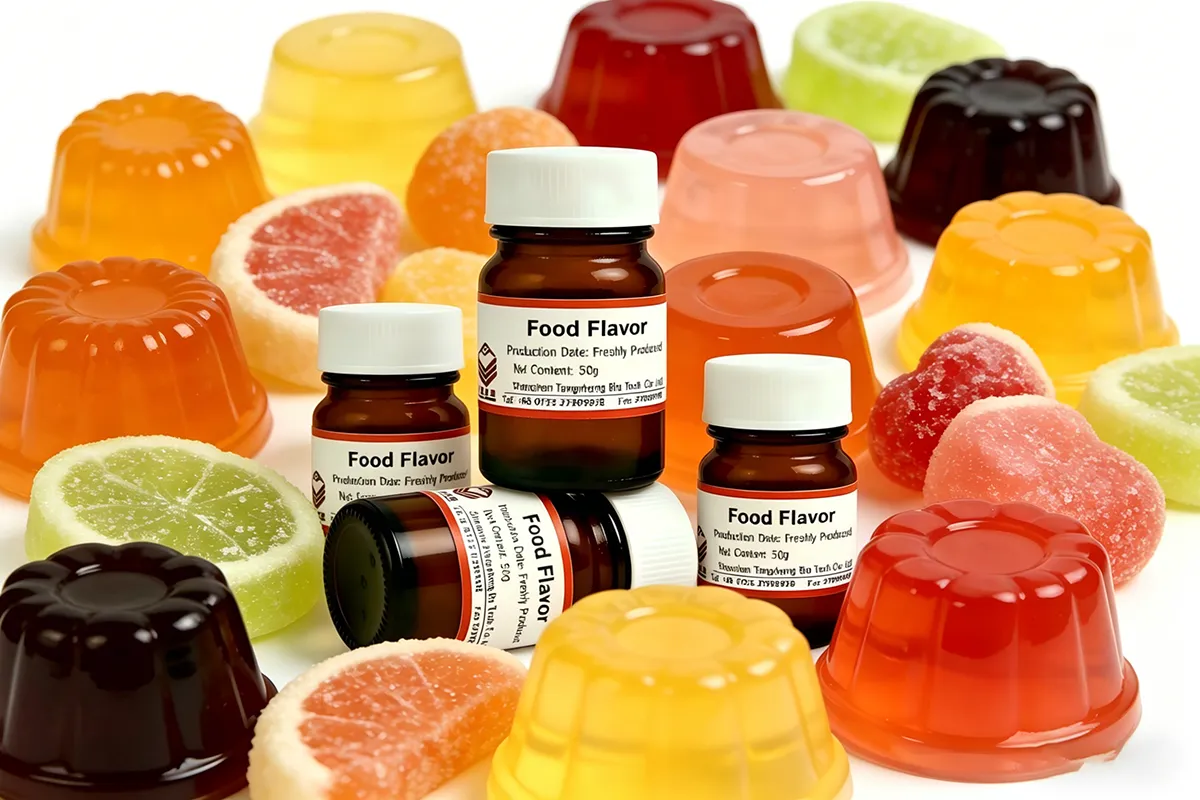
1. Definition
According to the current National Food Safety Standard for Jelly, jelly refers to a gel-like or semi-fluid gel-like food processed by sol or non-sol, blending, filling, sterilization, cooling and other processes, using two or more of water, sugar, starch sugar, fruits and vegetables and their products, milk and dairy products, egg products as raw materials, with or without food additives and food nutrition fortifiers.
2. Classification
2.1 Classification by Form
-
Gel Jelly: Presents a gel-like form and can basically maintain its original shape after forming.
-
Suckable Jelly: Presents a semi-fluid gel-like form, and the contents can be sucked with a straw after being poured out of the packaging container.
2.2 Classification by Product Ingredient Characteristics
-
Fruit-flavored Jelly: Low fruit juice content, mainly relying on food essence to provide flavor.
-
Fruit Juice Jelly: Added with fruit juice or pulp, and the total content of original fruit juice (pulp) must be marked.
-
Fruit Pulp Jelly: Added with fruit pieces or grains, and the total content of fruit pulp must be marked.
-
Milk-containing Jelly: Added with milk or dairy products, and its protein content is not less than 1.0%.
-
Other Types of Jelly: Jelly other than the above types, such as coffee-flavored jelly, tea-flavored jelly, functional jelly, etc.
3. Jelly Production Process Flow
4. Key Control Points in Jelly Production
-
Gel Dissolution: The colloid must be dry-mixed with a sufficient amount of granulated sugar first, then added to cold water for dispersion and swelling to prevent the formation of insoluble gel clusters (fish eyes) and ensure uniform glue solution.
-
Acid Adjustment (Most Critical): Acidulants (such as citric acid) must be added when the glue solution is cooled to below 70℃ (usually 60-65℃). Adding acid at high temperature will cause colloid hydrolysis, seriously damage the gel strength, and result in soft and watery products.
-
Sterilization and Cooling: After sealing, pasteurization (such as 85-95℃, 20min) should be adopted to kill pathogenic bacteria and spoilage bacteria. After sterilization, it must be quickly cooled to below 40℃ immediately to terminate the thermal process, prevent the growth of thermophilic bacteria and promote gel setting.
-
Sealing Tightness: The seal must be tight and free of leakage, otherwise secondary pollution will occur during subsequent sterilization and cooling, leading to product mold.
5. Timing of Essence Addition in Jelly
-
Essence Addition Process: Added after gel boiling, in the later stage of blending and before filling, when the temperature of the glue solution is as low as possible.
-
Temperature Control: After the colloid, sugar and other raw materials are boiled at high temperature and completely dissolved, cool the glue solution to below 70℃ (usually 60-65℃), then add the essence, stir evenly and fill immediately.
6. Basic Principles for Selecting Essence for Jelly
-
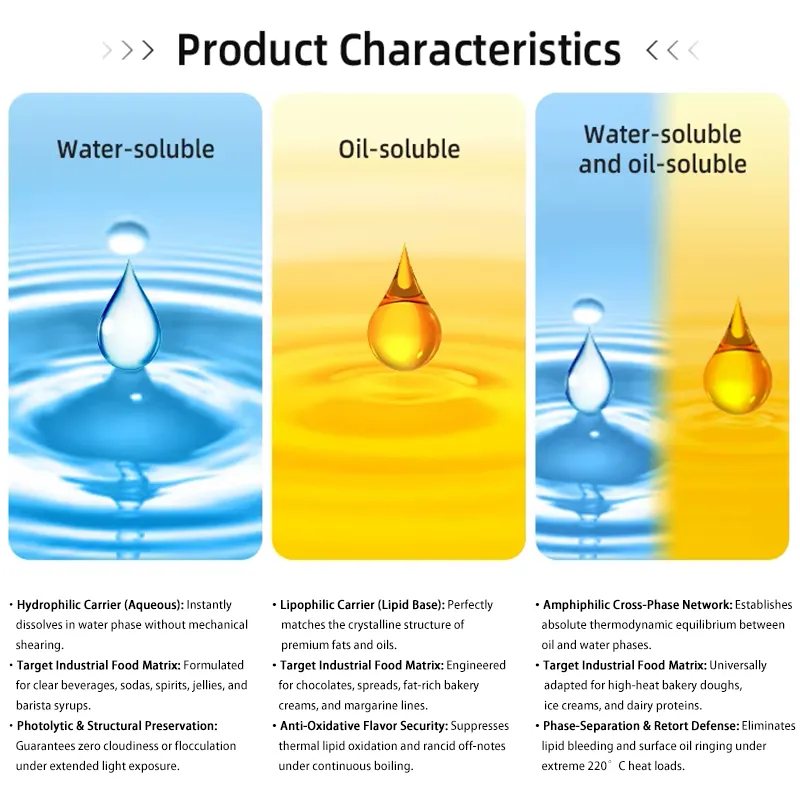
Generally, edible sweet flavor essence is selected: The company’s edible sweet water-based essence and water-oil dual-purpose essence are suitable for flavoring in jelly. The company’s water-oil dual-purpose essence is preferred as the first choice for jelly essence. Usually, jelly has low requirements on the temperature resistance of essence.
-
Recommended Dosage of Essence for Jelly: 0.1%~0.15%
7. Common Product Quality Problems and Main Causes in Jelly Enterprises
-
Water Separation (Dehydration Shrinkage): The most common problem. The main reason is improper colloid ratio or too high acid addition temperature (>70℃), leading to unstable gel network structure and poor water-locking capacity; excessive sterilization intensity or slow cooling can also damage the structure.
-
Insufficient Gel Strength (Too Soft, Shapeless): Insufficient colloid dosage or quality deterioration; colloid degradation caused by too high acid addition temperature; insufficient potassium/calcium ion content in raw materials, which cannot effectively promote gelation.
-
Microbial Contamination (Mold, Bulging): Mainly due to loose sealing, which sucks in contaminated air or cooling water during the cooling process; followed by incomplete sterilization or improper hygiene control.
-
Bubbles and Impurities: Incomplete degassing, or impurities brought by uncleaned pipelines and equipment.
-
Poor Flavor: Volatilization caused by too high essence addition temperature; imbalance of sweet and sour ratio.
8. Recommended High-Quality Essence Products for Jelly of the Company
|
Model
|
Product Name
|
Property
|
Color
|
Aroma Description
|
Product Features
|
|---|---|---|---|---|---|
|
190042
|
Lime Essence
|
Water-based
|
Colorless
|
Pure lime juice aroma
|
Prominent lime juice aroma, strong sour taste
|
|
100094
|
Strawberry Essence
|
Water-based
|
Colorless
|
Fresh and sweet strawberry aroma
|
Fresh and sweet strawberry aroma
|
|
100063
|
Banana Essence
|
Water-based
|
Colorless
|
Ripe and fresh banana aroma
|
Strong ripe banana aroma, high sweetness
|
|
100103
|
Hami Melon Essence
|
Water-based
|
Colorless
|
Strong and ripe hami melon aroma
|
Ripe hami melon aroma with a touch of sweetness
|
|
150011
|
Orange Juice Essence
|
Water-based
|
Colorless to pale yellow
|
Strong orange juice aroma
|
Sweet taste of orange juice
|
|
100482
|
Yogurt Essence
|
Water-based
|
Colorless
|
Pure fermented milk aroma
|
Strong fermented yogurt flavor
|
|
B0202802
|
Lychee Essence
|
Water-based
|
Colorless
|
Fresh and sweet lychee juice aroma
|
Sweet lychee juice aroma
|
|
351261
|
Caramel Essence
|
Water-oil
|
Colorless
|
Strong caramel sweet aroma
|
Strong caramel aroma with sweet taste
|
|
C0181904
|
Coconut Juice Essence
|
Water-oil
|
Colorless
|
Coconut juice aroma, pulp aroma, baking aroma
|
Prominent baking aroma
|