




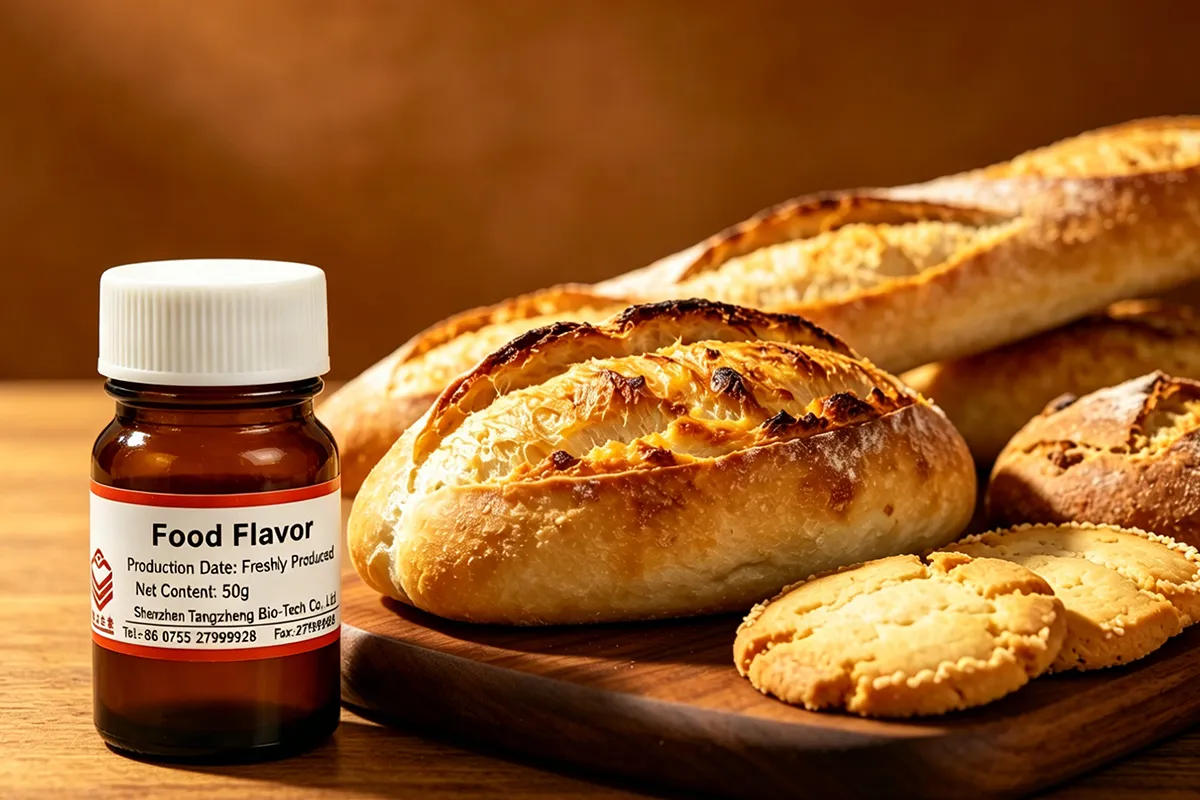
Discover how TangzhengFlavors’ encapsulation technology protects your food flavors during industrial processing.
Abstract: The thermal processing environment – especially industrial baking and extrusion – is notoriously harsh on food flavors. High heat often leads to “flavor flash-off,” where the most desirable top notes are lost before the product even reaches the shelf. Tangzheng Flavors addresses this industry pain point with advanced stabilization technologies designed to preserve the full spectrum of food flavors.
The Physics of Flavor Volatilization
Most food flavors are composed of volatile organic compounds (VOCs). When dough is baked at 200°C, the steam escaping the product carries these VOCs away. This “steam distillation” effect is the primary cause of flavor loss. Furthermore, the heat can cause sensitive molecules to oxidize, turning a fresh food flavor into something flat or metallic. TangzhengFlavors has studied these thermal dynamics to create a “defense-in-depth” strategy for your products.
Engineering Resilience: Encapsulation & Precursor Technology
To combat these losses, Tangzheng Flavors employs two cutting-edge methods:
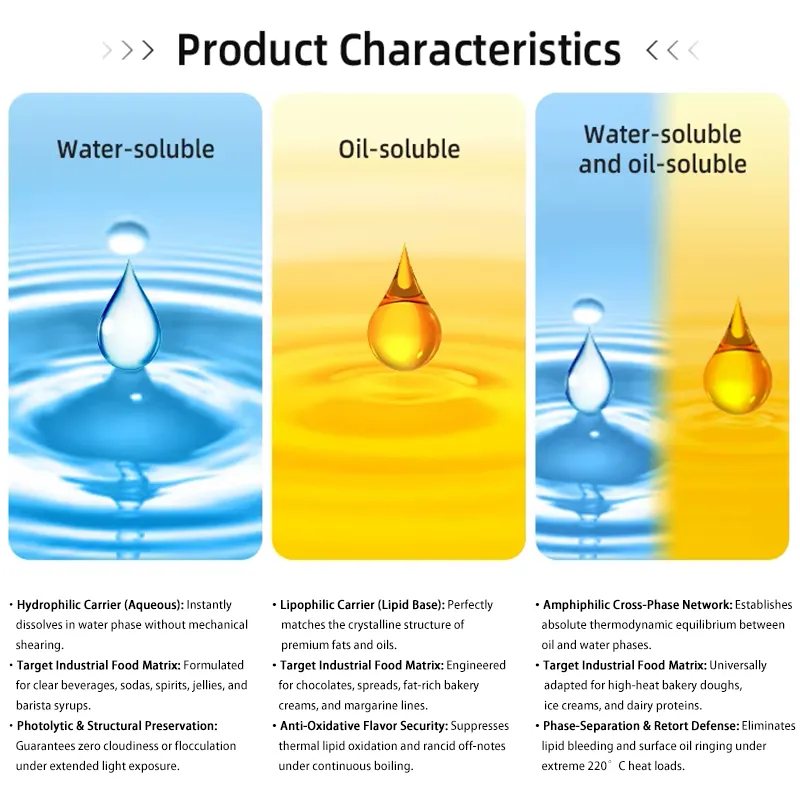
- Nano-Encapsulation: We wrap volatile food flavor molecules in a heat-resistant carbohydrate or lipid matrix. This “shield” prevents the flavor from interacting with the hot air during baking. The food flavor is only released upon mastication, providing a “burst” effect for the consumer.
- Thermal-Stable Base Carriers: Unlike standard flavoring houses, TangzhengFlavors selects high-boiling point carriers that naturally resist evaporation. This ensures that the heart of the food flavor – the umami and base notes – stays locked within the food matrix.
Economic Impact: Lower Dosage, Higher Impact
Many manufacturers try to compensate for flavor loss by simply adding more food flavor. This is inefficient and increases the “Cost in Use.” By switching to Tangzheng Flavors’s heat-stable range, clients often find they can reduce their dosage by 15-30% while achieving a more robust and long-lasting aroma. This optimization is essential for procurement managers looking to balance quality with cost-efficiency in large-scale food production.